What Is the Best Sealing Temperature for Aluminum Foil Lids?

Time:2026-10-03 Author:Amelia
0%

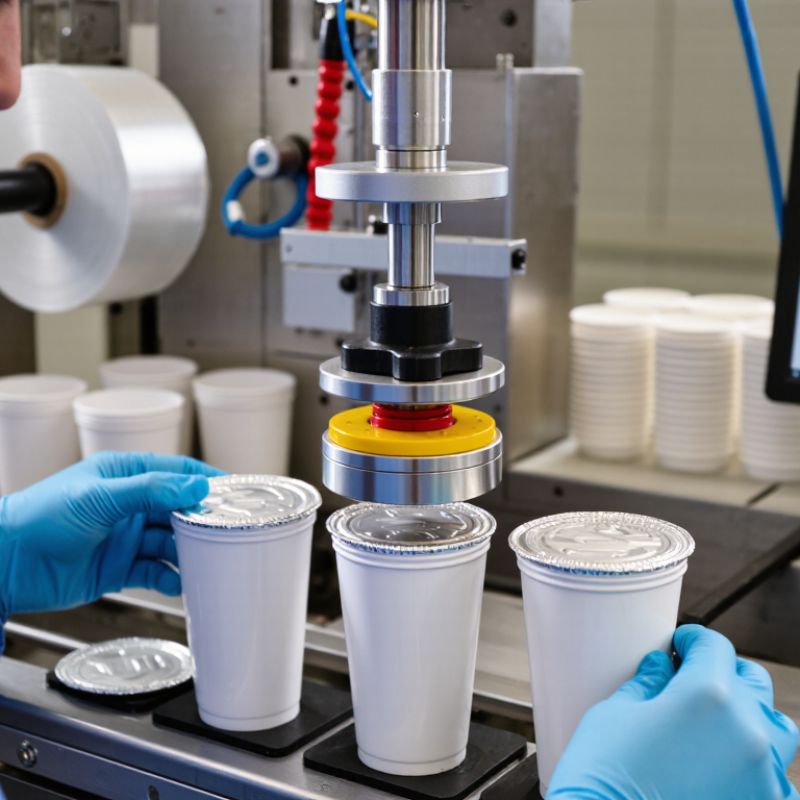
Manufacturers often ask, “what is the best sealing temperature for aluminum foil lids,” expecting one precise number. In practice, no universal setting exists. The correct temperature depends on the lid’s heat-seal coating, container resin, machine pressure, dwell time, and line speed. A coated aluminum lid may seal near 160°C, while another structure may require a higher or lower range. Treat these figures as starting points, not specifications. Good sealing begins with the material supplier’s technical data sheet. It also requires controlled trials on the actual production line.

During testing, I would inspect peel strength, visual appearance, leak resistance, and seal continuity. A sound seal should peel evenly without tearing the foil or leaving open channels. Watch the edges closely. Excessive heat can distort plastic cups, wrinkle the foil, or create a brittle seal. Insufficient heat may leave weak spots that appear acceptable but leak later. Record temperature, pressure, dwell time, and cooling conditions for every trial. Then test filled containers, not empty ones, because product residue can change seal performance. Independent laboratory checks can strengthen confidence, especially for food, pharmaceutical, or sensitive applications. Still, even experienced operators can misread a clean-looking seal. This guide explains how to narrow the sealing window, validate results, and recognize when a machine setting needs adjustment. The goal is not the highest temperature. It is a stable, repeatable seal.
What Is the Best Sealing Temperature for Aluminum Foil Lids?

Define the Sealant Window: Why 150–220°C Is Only a Starting Range

What Is the Best Sealing Temperature for Aluminum Foil Lids?

The 150–220°C range is only a starting point. Aluminum foil does not create the seal; its polymer coating does. Common polyethylene sealants may begin sealing near 105–130°C, while polypropylene systems often require 130–170°C. Actual values depend on coating thickness, dwell time, pressure, and container resin. EAFA technical guidance also notes that lidding foil constructions commonly use foil gauges from roughly 20 to 50 micrometres. Thicker structures can change heat transfer noticeably.

Use the sealant window, not a single temperature. ASTM F2029 identifies heat-seal initiation testing as a practical way to find the lower limit. ASTM F88/F88M then measures seal strength and failure mode. In production trials, test increments of 5–10°C. Hold pressure and dwell time constant. A 180°C setting may look efficient, yet it can wrinkle the coating, distort a plastic rim, or produce weak peel strength. Too little heat leaves channels and unbonded corners.

Real lines need a wider view. Temperature at the heater is not temperature at the interface. One technical mistake is trusting the machine display. I would verify the lidding surface with calibrated sensors, then test immediately after sealing and after conditioning. Seal strength can shift after cooling. A report from the Flexible Packaging Association emphasizes that material structure and process control strongly influence package performance, but it does not provide one universal setting. That limitation matters. The best window may sit near 155°C for one laminate and above 200°C for another. Testing must decide.

What Is the Best Sealing Temperature for Aluminum Foil Lids?

The 150–220°C range is only a starting point. The practical sealant window depends on the sealant chemistry, coating thickness, dwell time, pressure, and packaging substrate. This reference profile uses a PE-based sealant structure under constant pressure and a 0.5-second dwell time.

Seal strength generally increases as the sealant softens, reaches a stable operating plateau, and may decline when overheating causes film distortion or sealant degradation. The optimum temperature should be confirmed by peel-strength, burst, and leak-testing on the actual lid and container combination.

Match PE, PP, and Lacquer Coatings to Their Heat-Sealing Temperatures

What Is the Best Sealing Temperature for Aluminum Foil Lids?

The best sealing temperature depends on the coating bonded to the container rim. Aluminum foil conducts heat quickly, but the coating controls the actual seal. PE-coated lids commonly seal between 120°C and 160°C. PP coatings usually require higher temperatures, often from 160°C to 210°C. Lacquer-coated lids may need approximately 180°C to 230°C, depending on the resin and application method.

These ranges are practical starting points, not fixed instructions. Coating thickness, rim material, sealing pressure, and dwell time can shift the correct setting.

A thin PE layer may seal at 135°C, while a heavier layer may need more heat or longer contact. PP often needs a clean, firm seal bar because insufficient pressure can leave weak channels.

Lacquer coatings can appear sealed before they develop reliable peel strength.

During trials, increase the temperature gradually in 5°C steps. Check peel behavior, wrinkles, coating transfer, and visible rim coverage.

A good seal should open consistently without tearing the container rim or leaving unbonded areas. Test immediately and after storage, because some seals change as they cool.

I have found that visual inspection alone is unreliable. It misses small leaks. In one process review, the temperature looked correct, but short dwell time caused intermittent failures. The lesson was uncomfortable: temperature was not the only problem.

Record the actual sealing-bar temperature, pressure, dwell time, and material batch for every trial.

Set Dwell Time at 0.2–1.0 Seconds and Pressure at 0.2–0.5 MPa

What Is the Best Sealing Temperature for Aluminum Foil Lids?

The best sealing temperature depends on the lid coating, container material, and sealing equipment. In many production trials, 180–220°C provides a useful starting range for coated aluminum foil lids. However, temperature alone does not create a reliable seal. Dwell time and pressure strongly affect heat transfer and bond formation. A practical setup often uses 0.2–1.0 seconds of dwell time and 0.2–0.5 MPa of pressure. Short dwell times suit thin, heat-sensitive materials. Longer dwell times may help thicker structures, but excessive heat can distort the container rim.

Tips: Begin near 200°C, 0.5 seconds, and 0.3 MPa. Test carefully.

Check the seal after cooling, not immediately after removal. A good seal should resist peeling without tearing the container rim. Inspect for wrinkles, open corners, burnt coating, and uneven contact marks. I have found that pressure above 0.5 MPa does not always improve results. It can deform soft cups instead. Clean rims also matter. A small drop of oil or powder can create a hidden leak. Test several samples from the beginning, middle, and end of a production run. This reveals temperature drift and inconsistent pressure. Do not rely only on appearance. A seal may look smooth but fail during transport. Record every adjustment, because a slightly lower temperature may work better after the equipment warms up. Expect some trial and error. That is normal.

Map a 10–20°C Temperature DOE to Find the Strongest Seal Window

What Is the Best Sealing Temperature for Aluminum Foil Lids?

The best sealing temperature is not a fixed number. It depends on the lid coating, container resin, pressure, and dwell time. In production trials, a temperature that looks ideal can still produce weak edges or channel leaks. A controlled temperature DOE reveals the usable sealing window.

Map a 10–20°C temperature range around your current setting. For example, test 150, 155, 160, 165, and 170°C across several repeated samples. Keep pressure, dwell time, foil structure, and container dimensions unchanged. Record seal strength, peel appearance, wrinkles, burn marks, and visible leakage. Small details matter. A smooth peel is useful, but it does not prove package integrity.

Test the low and high limits again. The low side may show incomplete coating flow and intermittent seals. The high side may create brittle bonds, distortion, or coating damage.

Use calibrated sensors near the sealing surface, not only the machine display. Allow equipment to reach thermal stability before sampling.

I would also inspect seals after cooling, because hot results can be misleading. One trial may not be enough.

Choose the strongest temperature window, not merely the highest seal-strength value. A practical window should tolerate normal machine variation and material changes. If 160°C performs well but 165°C fails after pressure changes, 160°C may be safer. Review the data with quality and production teams. DOE results need judgment.

Validate Seal Strength and Leaks with ASTM F88 and ASTM F2029

What Is the Best Sealing Temperature for Aluminum Foil Lids?

There is no universal sealing temperature for aluminum foil lids. The correct setting depends on coating chemistry, lid structure, cup material, dwell time, and pressure. In production trials, a small temperature change can create wrinkles, weak bonds, or coating transfer. The 2024 Flexible Packaging Association report valued U.S. flexible packaging sales at approximately $42.9 billion in 2023. That scale reflects the need for repeatable, measured sealing processes.

ASTM F2029 helps identify the heat-seal initiation temperature and usable sealing window. It compares seal performance across controlled temperatures. ASTM F88 then measures seal strength, usually in force per unit width. Test samples should represent actual production conditions, including line speed and cooling time.

A strong peel result does not always prove leak-free packaging. ASTM F2029 is not a direct leak test. Add a suitable leak method, such as pressure-decay or dye penetration testing, when package integrity is critical. This distinction is often missed.

Tips: Start below the expected temperature, then increase it gradually. Test at least five temperatures around the target range. Record peel appearance, seal width, and failure mode. Watch for foil tearing, adhesive residue, or channels at the edge. Do not trust one successful sample. Real production variation is less polite. Temperature alone may not fix a poor seal; pressure, contamination, and dwell time may matter more. Recheck the window after changing materials or equipment.

FAQS

Why is 150–220°C only a starting range for aluminum foil lids?

The foil transfers heat, but its polymer coating creates the seal. The correct setting depends on coating type, thickness, pressure, dwell time, and rim material. One laminate may seal near 155°C. Another may need above 200°C.

What temperature range suits different lid coatings?

Polyethylene coatings commonly seal around 120–160°C. Polypropylene coatings often need 160–210°C. Lacquer coatings may require about 180–230°C. These are testing ranges, not guaranteed instructions.

How should the sealing temperature be adjusted during trials?

Start with a moderate setting and increase it in 5°C steps. Keep pressure and dwell time unchanged during each comparison. Record wrinkles, coating transfer, open corners, and peel behavior. Small changes can matter.

What dwell time and pressure are practical starting points?

A useful starting range is 0.2–1.0 seconds and 0.2–0.5 MPa. You might begin near 200°C, 0.5 seconds, and 0.3 MPa. Short contact suits thin, heat-sensitive structures. Thicker materials may need longer contact.

Can higher pressure compensate for low sealing temperature?

Not reliably. Higher pressure may deform a soft container rim without improving bonding. Low temperature can leave channels and unbonded corners. Pressure must work together with heat and contact time.

How can operators verify the real sealing temperature?

The heater display may not show the interface temperature. Use calibrated sensors on the lidding surface when possible. Check samples immediately after sealing and again after cooling. The displayed value can mislead.

What signs indicate an unreliable seal?

Look for wrinkles, burnt coating, uneven contact marks, and open corners. A smooth surface can still contain tiny leaks. A good seal should peel consistently without tearing the rim. Visual inspection alone is weak.

How do contamination and production drift affect sealing?

A small drop of oil or powder can create a hidden leak. Test samples from the beginning, middle, and end of a production run. Record temperature, pressure, dwell time, and material batch. Equipment may warm gradually. I sometimes underestimate that effect.

Conclusion

Determining what is the best sealing temperature for aluminum foil lids depends on the lid’s sealant layer, container material, and sealing equipment. The commonly cited range of 150–220°C should be treated only as a starting point, not a universal setting. PE, PP, and lacquer coatings each have different heat-sealing behaviors, so the temperature must be matched to the specific coating. Seal quality is also affected by dwell time and pressure; practical starting points are 0.2–1.0 seconds and 0.2–0.5 MPa.

A controlled temperature design of experiments can help identify the strongest and most consistent sealing window. Test temperature steps of approximately 10–20°C while keeping other variables controlled, then evaluate seal strength, appearance, and leak resistance. ASTM F88 can be used to measure seal strength, while ASTM F2029 can support heat-sealing process evaluation. The optimal setting is the lowest temperature that produces a reliable, continuous seal without damaging the foil, coating, or container.

Amelia

Amelia

Amelia is a seasoned marketing professional with a wealth of expertise in our company’s core offerings. With an unwavering passion for driving growth and innovation, she plays a pivotal role in shaping our marketing strategies and enhancing brand visibility. A key aspect of her responsibilities......